

CBP Automates ACE Portal Importer Account Applications
October 31, 2025
Customs Bond Update: Bond Saturation
November 11, 2025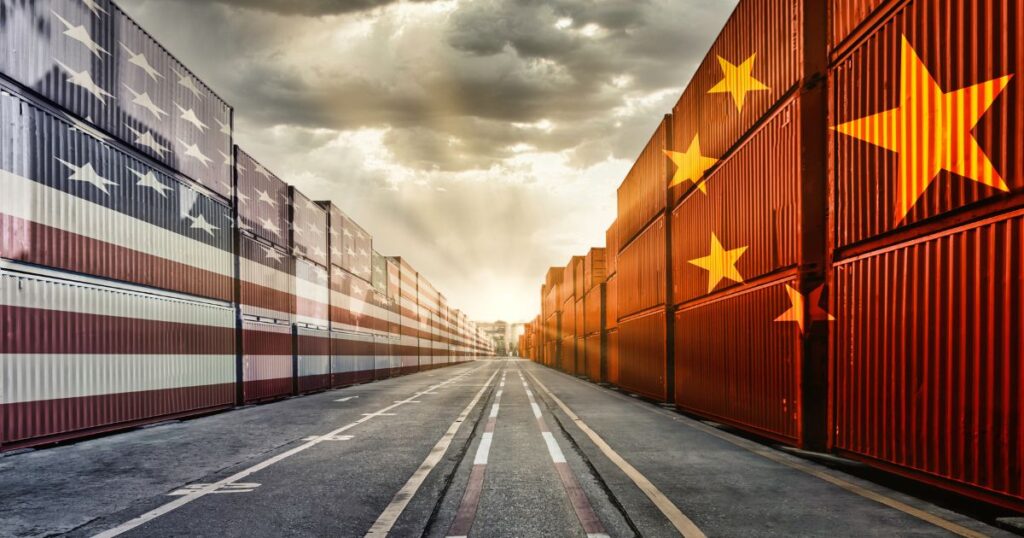
U.S.–China Agreement Reached Following Trump–Xi Meeting (2025)
During high-level talks this week, President Trump and President Xi Jinping reached an understanding to pause and partially reverse recent tariff and regulatory measures, signaling a temporary easing of trade tensions between the United States and China.
This marks the most significant bilateral economic development since the U.S.–China Phase One Trade Agreement (2020) and reflects a renewed effort to stabilize trade and investment flows amid global supply chain pressures.
Key Outcomes from the Meeting
- Suspension of 100% Tariffs
- The United States will not implement the planned 100% tariffs on Chinese imports that were scheduled for November 1, 2025.
- This de-escalates a major potential disruption to global trade and consumer prices.
- Reduction of IEEPA “Fentanyl Tariffs”
- The tariffs imposed under the International Emergency Economic Powers Act (IEEPA) — targeting fentanyl-linked Chinese exports — will be reduced from 25% to 10%.
- This reduction aims to balance enforcement pressure with cooperation on fentanyl control measures.
- Suspension of Port Fees on Chinese-Made Ships
- The new fees applied as of October 14, 2025, on Chinese-built and owned vessels calling at U.S. ports will be suspended for one year with a reported starting date of November 10.
- Suspension of the September 29 Interim Rule
- Bureau of Industry and Security’s interim final rule (“Affiliate Rule”) issued on September 29, 2025, which extended export restrictions and licensing requirements to corporate subsidiaries 50% or more owned by restricted Chinese firms, will be suspended for one year with a reported starting date or November 10.
- This pause prevents immediate expansion of U.S. export controls on Chinese-affiliated entities.
China’s Commitments
In return, China has agreed to several reciprocal measures:
- Remove fees on U.S.-made or owned vessels entering Chinese ports.
- Issue general licenses for rare earth elements and critical minerals exports to the United States addressing the controls placed by China in April 2025 and October 2022.
- Commit to purchase U.S. soybeans through 2028, providing long-term stability for U.S. agricultural exports.
Next Steps
- Implementation will require formal regulatory or executive actions in both countries.
- U.S. agencies (likely the Department of Commerce, Treasury, and USTR) will issue official notices codifying the suspensions and tariff adjustments.
- A follow-up meeting may be expected in early 2026 to evaluate compliance and consider extensions.
President Trump has concluded agreements, MOUs, framework agreements, and joint statements in 2025 so far (Malaysia, Thailand, Vietnam, South Korea, and Japan)
- The following countries will maintain a 19% tariff.
- Malaysia 0% reciprocal tariff for 1,711 HTS listed in the Annex.
- All other products of Malaysia will receive a 19% reciprocal tariff.
- Thailand will continue at 19% reciprocal tariff
Vietnam– They will receive a 20% reciprocal tariff on all products except those that may be in Annex II. Those details should be completed in the coming weeks.
Japan & South Korea– No new tariffs were announced at this time during their talks.
We are still awaiting official guidelines from CBP regarding this and as more develops we will continue to keep you updated. If you have further questions, please feel free to contact your Western Overseas Representative.